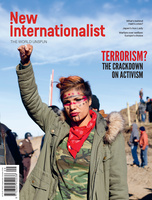
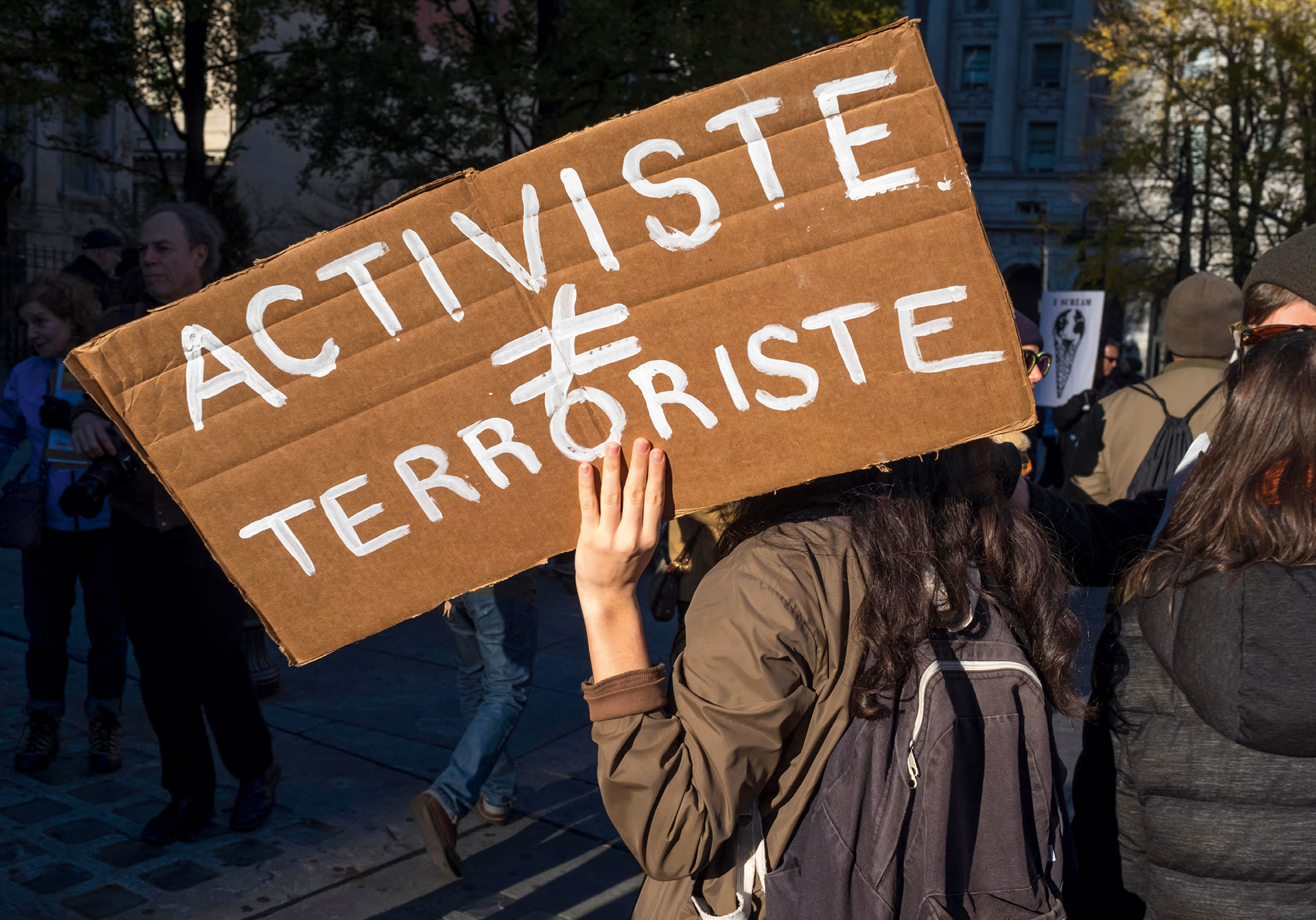
The Sotos are unlikely terrorists.
A couple with three children, Elizabeth and Ines Soto lived in the Dallas-Fort Worth area of Texas in the United States, where they printed anarchist zines in their garage on an office printer, using a paper cutter and book binder to put them together. They hosted stalls at zine fairs, selling titles such as ‘Plant Propagation for the People’ and were members of a local leftwing book club named after the twentieth century anarcho-feminist thinker Emma Goldman.
On the evening of 4 July 2025, the couple attended a noise demonstration outside the Prairieland Immigration and Customs Enforcement (ICE) detention centre, south of their home. A small crowd gathered, setting off fireworks and chanting slogans in solidarity with those being held inside. They had flyers reading: ‘Free all political prisoners!’ Someone broke off from the main group and graffitied a guard building. The tyres of a facility van were also slashed.
After the Sotos left the protest, a chaotic scene unfolded. Guards at the ICE facility ordered the protesters to disperse, which most did. However, when a local police officer arrived on the scene and drew his gun, Benjamin Song, an armed protester, fired her own weapon, striking the officer near the collarbone. (The officer was released from hospital hours later.)
The Sotos were arrested that evening and four days later prosecutors announced they were charging the couple, along with eight other individuals, with the attempted murder of a federal officer. The couple were members of the ‘North Texas Antifa Cell’, government lawyers claimed, and the protest was a ‘coordinated riot and attack’. (The term ‘antifa’ is an abbreviation of the term ‘antifascist’, and has been used by the right in the US and beyond to smear leftwing activists.) The case would eventually expand to include 22 people, many of whom, like the Sotos, were not present at the detention centre when shots were fired.
Their situation escalated significantly when, on 10 September last year, the rightwing media firebrand Charlie Kirk was assassinated while speaking at a campus rally. Shortly afterwards, president Donald Trump declared war on the ‘radical left’ and issued an executive order designating ‘antifa’ a domestic terrorist group. Experts agree there is no formal organization or network of ‘antifa’ cells in the US, but this has not deterred Trump and his allies; former homeland security secretary Kristi Noem has described antifa as ‘just as dangerous’ as groups like Hamas, Hezbollah and ISIS.1 In this presidential memorandum on the subject, Trump outlined an expansive view of antifa as defined by ‘anti-Americanism, anti-capitalism and anti-Christianity; support for the overthrow of the United States government; extremism on migration, race and gender; and hostility towards those who hold traditional American views on family, religion and morality.’2
Ultimately, eight of the Prairieland defendants, including the Sotos, were charged with ‘providing material support to terrorists’. The case against the couple seemed to revolve mainly around what the government termed the ‘printing press’ in their garage, which was used, in the prosecutor’s telling, to mass produce insurrectionary materials. Their membership in the Emma Goldman Book Club was also entered into evidence against them. In June, Elizabeth Soto was sentenced to 50 years in prison. The following month, Ines received the same sentence.
‘The weight of the sentences that have been handed down is crushing but we should not be surprised’
Speaking outside Ines’ sentencing, their son Esteban read a letter from his parents. ‘The weight of the sentences that have been handed down is crushing but we should not be surprised,’ the letter read. ‘The government has shown it is willing to separate loved ones across borders, cage people in squalid detention centres, bring violence into loving neighbourhoods, and gun people down in the streets.’
But the US is not the only government that has, in recent years, shown itself capable of using terrorism laws to target leftwing activism. In Britain, the case of the Filton 4 echoes that of the Prairieland defendants thousands of miles away.
Policing Palestine solidarity
The case stems from the early hours of 6 August 2024, when four activists affiliated with the direct action group Palestine Action gained entry to Israeli arms company Elbit Systems’ factory in Filton, near Bristol. One of the activists, Fatema Rajwani, 21, later told a court that her aim was to ‘dismantle as many weapons as possible’ that might be used in Gaza to kill and injure children.3 The group used sledgehammers and crowbars to destroy computers, drones and other equipment. In the space of 20 minutes, they destroyed around 40 weapons, including quadcopters (known as ‘killer drones’).
As in the Prairieland case, further chaos ensued when security staff intervened; one of the defendants was later found guilty of hitting a police officer with a sledgehammer. Normally, this kind of protest would have been prosecuted under laws concerning criminal damage and bodily harm. But in July 2025, Palestine Action was proscribed as a terrorist group by the British government, making membership of or support for the group a criminal offence punishable by up to 14 years in prison. In June, when the verdict in the Filton 4 case was passed down, the judge surprised the jury by informing them that the activists were being sentenced as having a ‘terrorist connection,’ despite the protesters never facing terrorism charges.
The case may be the first of its kind in which Palestinian solidarity activists have been hit with a ‘terrorism connection’, but it is unlikely to be the last. ‘Treating direct action protests as terrorism leads to a disproportionate response to the people who are doing it. But it also has serious consequences for the human rights of everyone else because of the speech restrictions that come with it,’ says Tom Southerden, the law and human rights director at Amnesty International UK. ‘Nobody knows where the bottom of this is.’
Indeed, Defend Our Juries, a group founded in 2020 to defend the legal process in Britain, have confirmed more than 3,590 arrests since the proscription of Palestine Action. These include eight perceived organizers arrested and their homes raided in September 2025 and charged with a total of 29 counts of Terrorism Act offences, the group says.
Colonial roots
It is easy to assume that the use of terrorism law against organizers and activists originates in the post-9/11 period during the long and ill-fated War on Terror. The laws written in this period, such as the Patriot Act in the US and the Terrorism Act in Britain, are certainly the legal basis for the prosecutions we see today. But these laws have a longer and more complex lineage that is intimately tied to empire and resistance to it.
The word originates from the French Revolution of 1789, where the term ‘terrorisme’ was used to describe the ‘terror’ enacted on the ruling class by the revolutionaries. This is a profound etymology, one that reveals that ‘terrorism’ is often applied to political violence that threatens the ruling classes and the state.
‘Terrorism laws have always been used as a political tool in order to suppress different forms of dissent to the state’
Terrorism laws ‘have always been used as a political tool in order to suppress different forms of dissent to the state, and to provide powers to the police and security agencies in order to repress the possibility of dissent fomenting,’ argues Asim Qureshi, research director at the UK-based human rights advocacy group CAGE.
The lineage of today’s terrorism laws lies in colonial era ‘sedition’ law pioneered first in Ireland, and then throughout the British Empire in places like Malaya, Egypt and India. The crime of ‘sedition’ was first enacted in 1661 to punish criticism of the English king, and was later exported to the empire more widely to suppress any ‘illegal incitement against the established order’.4 Many of these colonial-era sedition laws are still on the books and used to prosecute critics to this day in, for example, India, Pakistan, Hong Kong, Thailand and Malaysia.5
‘The colonial authority is the arbiter of moral good, and empire is the force for moral good,’ Qureshi says. ‘Anything that dissents or is seditious towards that idea has to be clamped down, controlled and suppressed as much as possible.’
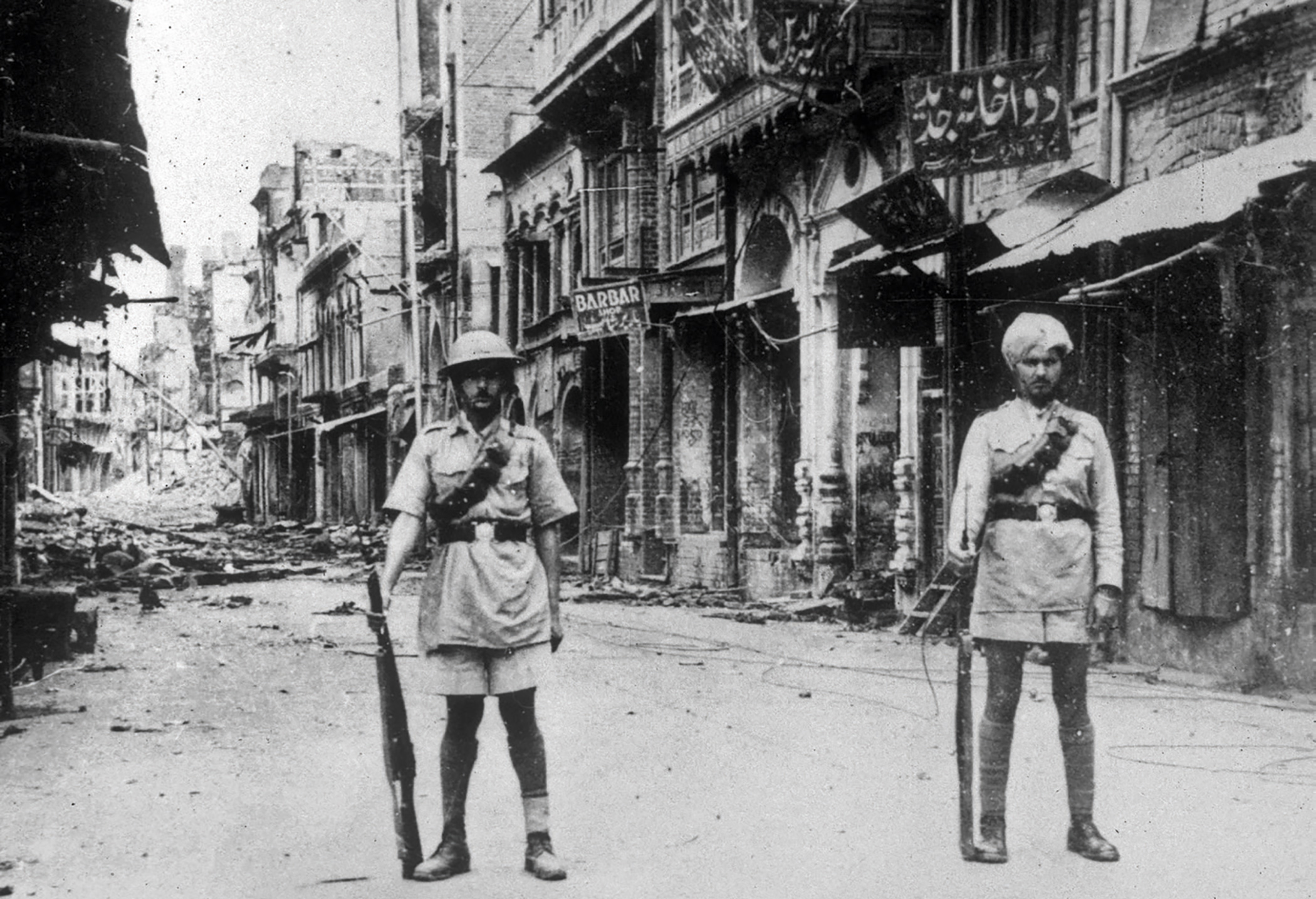
We can see this indelible connection between imperial violence, sedition laws and ‘terrorism’ in the story of Udham Singh and the Jallianwala Bagh massacre in Amritsar, India in 1919. Several thousand civilians had gathered that April to celebrate the Sikh New Year. A British general, Reginald Dyer, saw the crowd as a violation of orders prohibiting public assembly and ordered troops to fire indiscriminately. In the resulting mayhem, at least 379 men, women and children were killed and more than a thousand injured. For Indians, Jallianwala Bagh became, as historian Gyan Prakash puts it, ‘a byword for colonial injustice and violence’.6
One of the survivors of the massacre was a 20-year-old Udham Singh, who went on to become deeply involved in revolutionary and anti-colonial politics. Twenty one years later, Singh entered an event in London where Michael O’Dwyer, who was the lieutenant governor of Punjab at the time of the massacre, was scheduled to speak. Singh pulled out a revolver that he had hidden in a book and shot O’Dwyer. During the subsequent trial, Singh explained what had motivated the assassination. ‘For [a] full 21 years, I have been trying to seek vengeance,’ he said. ‘I am happy that I have done the job. I am not scared of death. I am dying for my country. I have seen my people starving in India under the British rule.’
In this episode we can see an inherent contradiction; the violence of the state may kill hundreds, but it is the politically motivated assassination of one of the men responsible that is understood as an act of terrorism.
These laws have a longer and more complex lineage that is intimately tied to empire and resistance to it
Qureshi also sees an important antecedent of today’s use of terror laws in the union-busting of the early 20th century, and the often violent repression of the Black civil rights movement in the US from the 1960s onwards. In Australia during World War One, for example, sedition laws were used aggressively against union organizers with the Industrial Workers of the World (IWW), who were anti-war. In the US, the FBI collaborated with the private Pinkerton Detective Agency hired by magnates and business owners to infiltrate and violently undermine labour organizing. The US’s own Sedition Act of 1918 created the legal framework for the imprisonment and deportation of trade unionists, anarchists and communists, including Emma Goldman herself during the Palmer Raids.
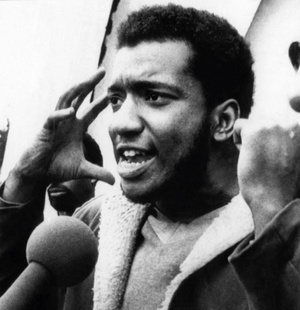
Perhaps most significant for understanding today’s counter-terrorism measures, Qureshi argues, was the organized state repression of the US civil rights movement. ‘The architecture of the global War on Terror was, in many ways, built directly on the architectural oppression of the Black Civil Rights Movement. This idea of dangerous Black nationalists, of people who are trying to undermine what is considered to be the status quo.’ Take, for example, the sustained campaign of infiltration and suppression waged against the Black Panther Party leader Fred Hampton, who was ultimately shot by police while asleep in bed in December 1969.
During this period too, ‘terrorism studies’ emerged as an academic discourse, primarily concerned with Palestinian armed resistance movements. When a raft of anti-terrorism legislation was signed in the immediate post-9/11 period, it was ostensibly to tackle the threat from Islamic extremism, but it was fortified by decades of anti-Palestinian thought. ‘The anti-Muslim policies of the post-9/11 era were built on a foundation of anti-Palestinian animus,’ argues anthropologist Darryl Li, who authored a report on the subject.7 In the decades since, it has been used to stigmatize and attack Arab and Muslim communities with arrests, round-ups, surveillance, imprisonment and abuses such as those at Abu Ghraib and Guantanamo Bay, and extrajudicial killings.
The legal battlefield
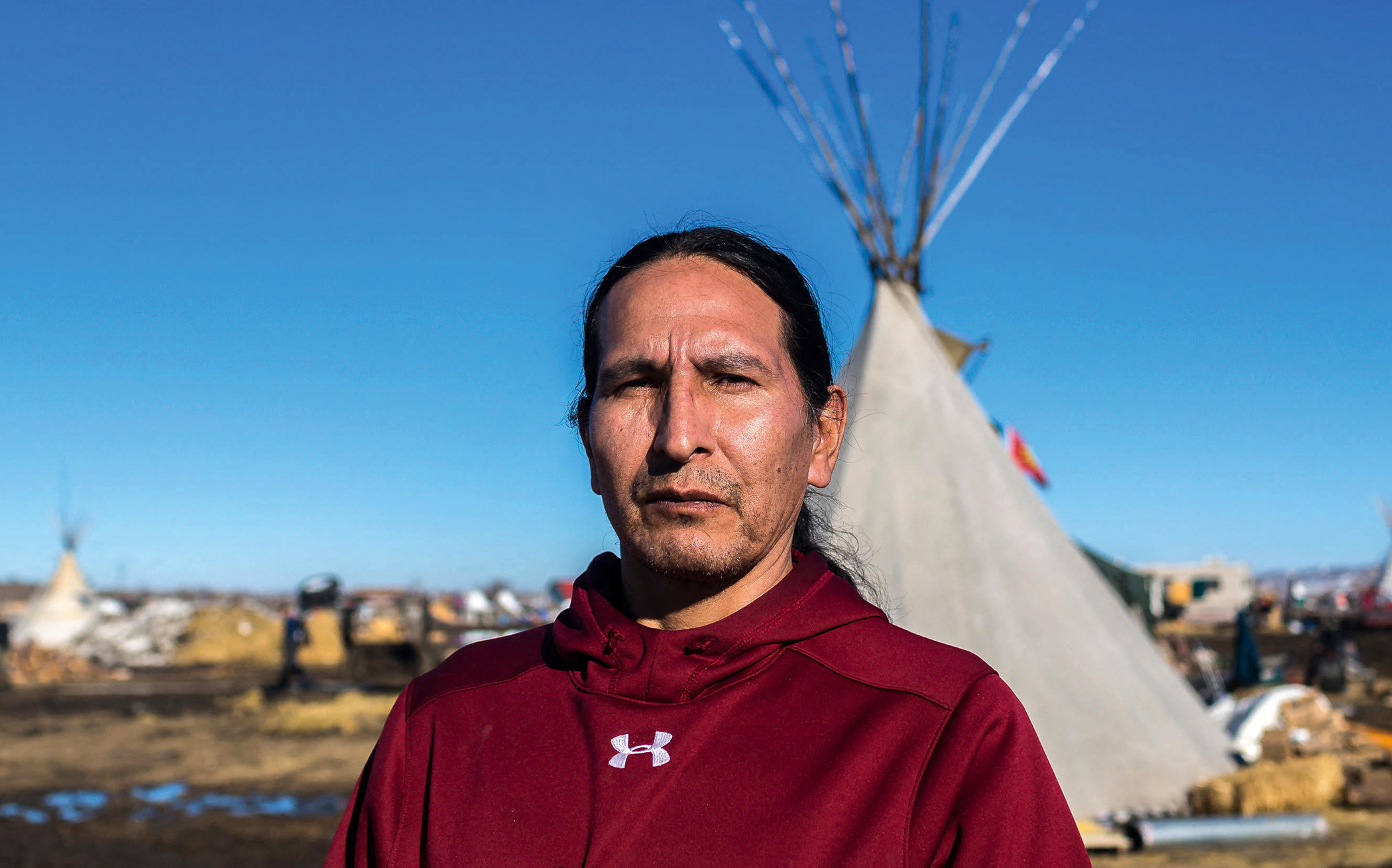
Twenty-five years on, the laws and practices established in this period have metastasized to target a wide range of social movements. This has particularly impacted pro-Palestinian, Black, Brown, Indigenous and environmental movements.8 When Native American activists and their allies rallied on the land of the Standing Rock Sioux Tribe in North Dakota in 2017 to protest the controversial construction of the Dakota Access Pipeline, they were investigated by counter-terrorism units within the FBI. (Ironically the persecution of these groups has occurred during the same period that white nationalist and white supremacist domestic terrorism has ballooned.9)
‘Rather than being “unintended consequences” of the security apparatus, the chilling and disruptive effect of these laws must be understood as an intentional outcome,’ wrote a coalition of US civil society groups in a 2023 report to the UN. ‘It is a feature, not a bug, of the so-called “counter-terrorism” architecture.’10
Nathan Whetton, a scholar of protest movements, argues that the origins of the most recent British crackdown originate in the climate change protests which kicked off with Extinction Rebellion’s ‘Declaration of Rebellion’ in October 2018. These climate protests were the biggest acts of civil disobedience in Britain in decades.
‘In the background there was a concerted effort by rightwing think tanks and policy forums, frequently funded by fossil fuel companies, to frame climate change narratives as “radicalism” and hurting “national security”,’ Whetton writes.11 ‘By framing the ideology of the environmental movement in this way, the door was slowly creeping open to the possibility of the use of counter-terror operations to shut down peaceful protests.’
We can see this trend playing out across Europe. From France’s attempted dissolution of climate action group Les Soulèvements de la Terre, to Spain’s classification of Extinction Rebellion under ‘national terrorism’ laws, to German investigations of Letzte Generation under organized crime and terrorism provisions, or Dutch airport bans on climate activists, and UK referrals of climate protesters under the Prevent programme.
‘Counterterrorism frameworks enable intrusive practices such as biometric identification, predictive watchlists and intelligence databases originally designed for violent threats,’ write legal scholars Alice Dejean de la Bâtie and Sharon Okunrobo Perez.12 ‘These measures blur the line between dissent and extremism, lowering thresholds for repression and reshaping activists into suspect communities.’
The repressive apparatus does not only impact Europe and the US. It has provided a blueprint and a cover for other regimes seeking to aggressively police mass movements, whether in Peru, Kashmir, the Philippines, Hungary or Germany.
There are, however, some rays of light in the darkness. The legal framework of terrorism laws often leaves open room for judicial challenge in the courts, even in the most egregious cases. The sentences of the Filton 4 and the Prairieland defendants may yet be overturned on appeal.
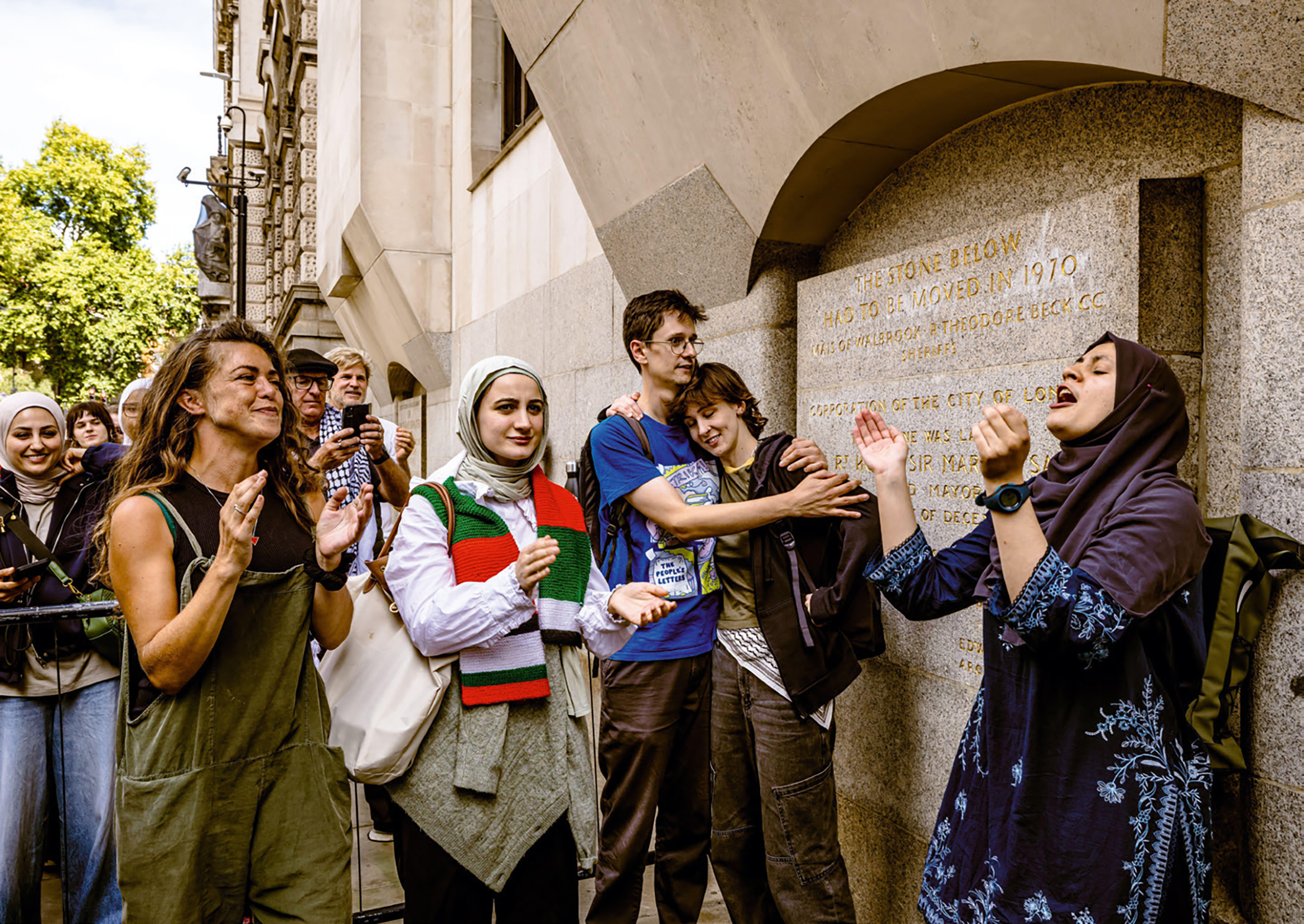
On 19 August, a London jury at the Old Bailey was unable to return a verdict for seven Palestine Action-affiliated defendants accused of criminal damage and violent disorder in relation to the 6 August break-in at the Elbit factory in Filton. Many of them were swept up in Operation Recomply, led by Metropolitan Police’s Counter Terrorism Command, even though they were not physically present at the break-in.
After spending 18 months in pre-trial detention, the seven walked free, emerging into the street to chants of: ‘I believe that we have won!’
- Joseph Gedeon and Robert Mackey, ‘Kristi Noem compares antifa...’, The Guardian, 8 October 2025, a.nin.tl/4X
- The White House, ‘Countering Domestic Terrorism...’ 25 September 2025, a.nin.tl/4Y
- BBC, ‘Activist intended to...’, 24 April 2026, a.nin.tl/4Z
- Lutz Wahnschaffe, ‘Liberal Universalism, Colonial Difference...’, Global Histories, Vol 9, No 2, December 2024, a.nin.tl/4Z
- Clooney Foundation for Justice, ‘Sedition Laws’, a.nin.tl/51
- Gyan Prakash, ‘The Massacre That...’, The New York Times, 13 April 2019, a.nin.tl/52
- Palestine Legal, ‘Anti-Palestinian Animus...’, 21 February 2024, a.nin.tl/53
- Sandra Cuffe, ‘Anti-terrorism laws...’, Truthout, 12 October 2018, a.nin.tl/54
- Southern Poverty Law Center, ‘Hate Map’, a.nin.tl/55
- Movement for Black Lives et al, ‘How the “War on Terror”...’ NGO Shadow Report before the United Nations Human Rights Committee, 12 September 2023, a.nin.tl/56
- Nathan Whetton, ‘Tracing the trend...’ LSE British Politics, 21 October 2025, a.nin.tl/57
- Alice Dejean de la Bâtie and Sharon Okunrobo Perez, ‘Labelling activists...’, International Journal for the Semiotics of Law, 2 February 2026, a.nin.tl/58
