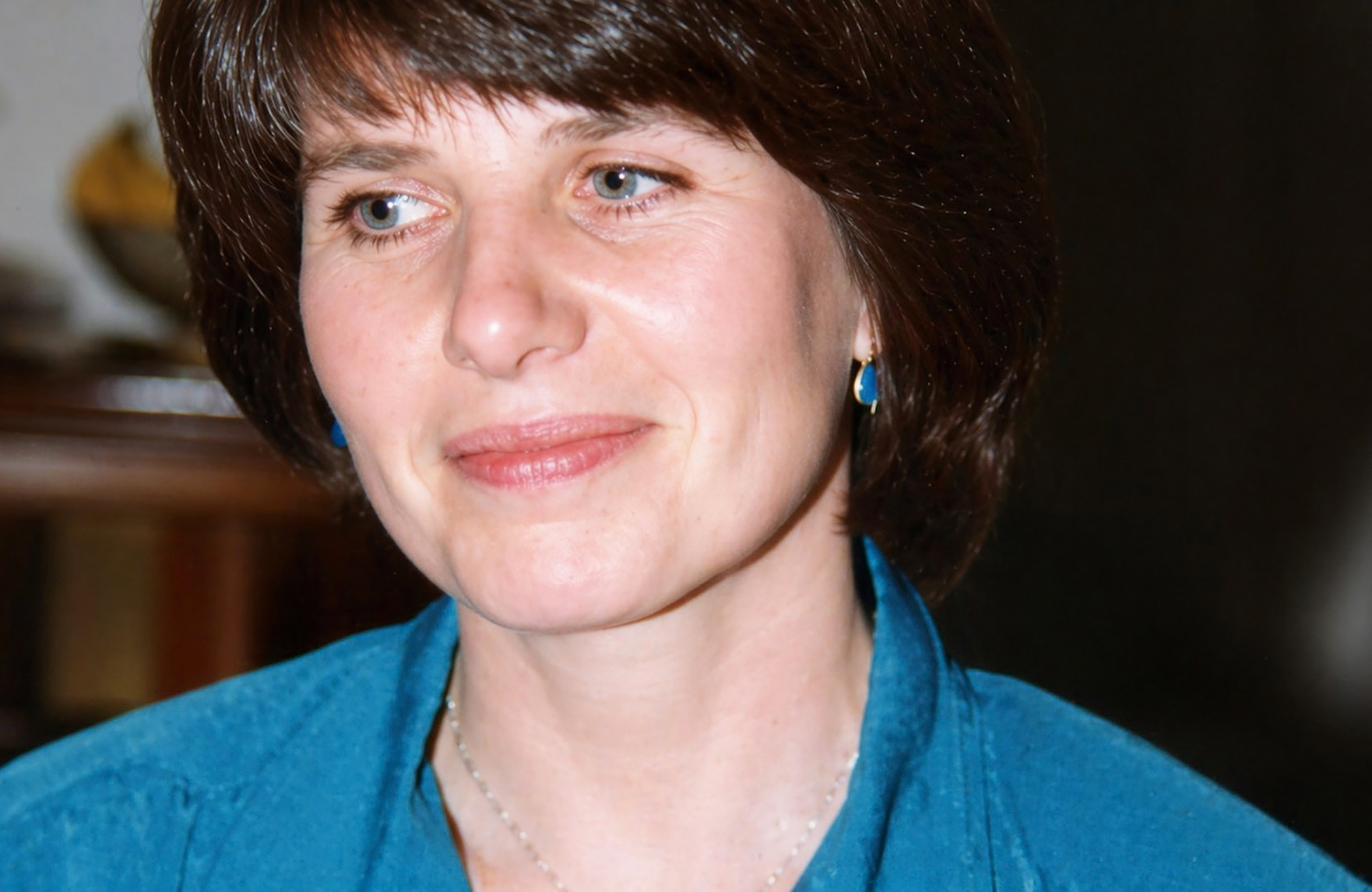
Lesley Adamson, who died at home following a long illness on 20 April, co-founded New Internationalist with her partner Peter.
She had a difficult start in life. Her father, Harry Bellhouse, suffered bouts of mental illness and spells in a psychiatric hospital that made it almost impossible to keep a job. His wife, Marjorie, having been evicted from a cottage tied to his job, did what she could to support Lesley and her two younger siblings by taking on sewing work, often late into the night. Frequent moves meant that Lesley’s education was disrupted, leading to her failing the 11-plus exam and being sent to a secondary school that was little more than an educational dumping ground for girls. After two years, a conscientious teacher arranged for her to sit a special exam, which led to a place in a grammar school, college in Bradford and qualification as a teacher.
She married Peter while he was still a student at Oxford University. In 1969, together with another student, Philip Maxwell, they started Third World First, which raised funds for projects in the Majority World by persuading students to donate one per cent of their income each year to a charity of their choice. The campaign still exists today under the new name of People & Planet. Lesley did much of the early work of travelling around universities to recruit organizers and set up new groups. Third World First’s termly magazine for members was called The Internationalist.
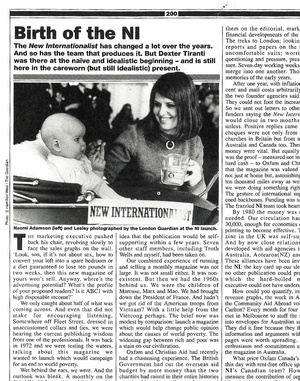
With initial backing from Oxfam and Christian Aid, the New Internationalist launched nationally in March 1973. What allowed the NI to get through the early, precarious years was a determination not to neglect the less exciting side of the job – marketing, administration, accounting and financial planning. Lesley was at the heart of this commitment – taking on the unglamorous role of seeing what needed to be done and stepping in to fill the gaps that threatened the enterprise. This was to be characteristic of Lesley’s work for the next 30 years – doing whatever needed to be done to make ideas into reality, and equipping herself with skills that were not necessarily of her choosing, in order to support all that she and Peter attempted together. Those involved in the earliest days of the NI know well that without Lesley’s contribution the magazine could not have survived.
In 1981 Lesley and Peter left the NI to take up work for UNICEF, handing over the magazine to an employee co-operative. They launched UNICEF’s annual State of the World’s Children report and for the following 16 years Lesley was responsible for its production, including co-ordinating the translation of reports and press materials into 60 languages, and handling the distribution to media and UNICEF offices in almost every country. The same skills and commitment were brought to bear on other vital UNICEF publications, including Facts for Life, which was eventually translated into over 200 languages and was used in schools and in training health workers all over the world. In the 1990s, The Economist described Facts for Life as ‘probably one of the best-read books in the world’.
During the 1980s, Lesley was offered a senior position by UNICEF executive director James P Grant. Not without regret, Lesley turned down the opportunity to move to New York and advance her own career, opting instead to ensure her two children had the kind of family stability she herself had lacked.
In 1996, UNICEF UK presented Lesley and Peter with the UNICEF Anniversary Award for Services to Children. Announcing the award, UNICEF UK director Robert Smith said: ‘Peter and Lesley have done other work for the UN and for the development community – but nothing, for sustained global influence and impact, for its quality, for its authority, can match their work for UNICEF.’
The continued existence of the NI is also, however, part of her legacy, and she remained a co-owner of the magazine until her death.
