Features
Articles about Features, ordered by date. 
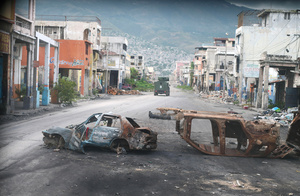
Into the void
As a new international force promises to crush Haiti’s gangs, Harold Isaac argues that the country’s deepest crisis is not criminal violence but the long collapse of the state – and follows one family navigating the consequences.

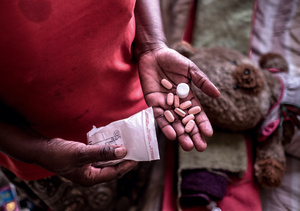
Shuttered dreams
In Botswana, a successful US-funded HIV programme is dead, and with it hopes for preventing new HIV infections in young women. Andrew Green speaks to those affected.
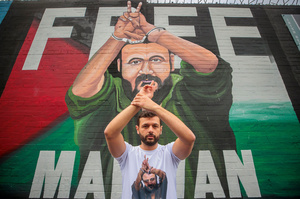
‘It’s a colonial word’: the son of a ‘terrorist’ speaks out
Arab Barghouti, the son of Palestinian political prisoner Marwan Barghouti, tells Bethany Rielly what it was like growing up with the label of ‘terrorist’ applied to his father, and why Marwan has the potential to unite Palestinians.
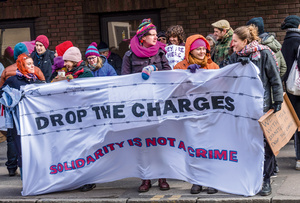
Solidarity forever
What would you do if you were accused of terrorism? asks Ben Smoke.
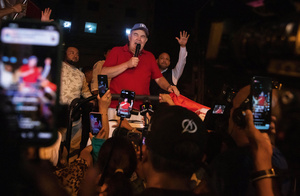
The power of terruqueo
A Peruvian concept can help us understand the equation of activism with terrorism, and how to fight it, writes Oscar Berglund.
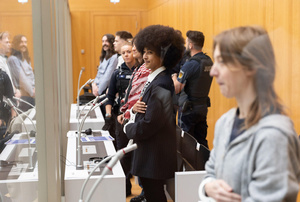
The repression spectacle
The trial of Germany’s Ulm 5 is part of a systematic repression of Palestine solidarity, argues Julia Damphouse, with wide-reaching consequences for activists everywhere.
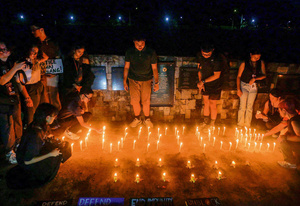
‘Love means fighting back’: resisting red-tagging
In the Philippines, being labelled as a communist ‘terrorist’ can mean arrest, imprisonment and even death, writes Iris Gonzales. But that hasn’t stopped journalists or activists.
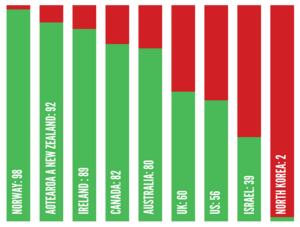
Activism - The Facts
Global Crackdown; Climate Clampdown; Silencing Solidarity.
Activism = Terrorism?
The Empire Strikes Back. Across the globe governments are using terrorism laws to prosecute protesters. Decca Muldowney traces the practice back to its colonial origins, and considers the future consequences for activism.
Revolutions of our time
From Sri Lanka to France, a spirit of revolt has echoed across the world in recent years. The Peoples’ Want, a global committee of organizers and revolutionaries, examine what makes an uprising successful and argue that the only answer is a new politics of unity based in internationalism.

The fjord remembers
In northern Norway the fight is on to save Sámi culture, and a precious ecosystem, from copper mining. Dominik Sipinski reports.
The billionaires’ playground
Tycoons like Musk may want us to believe it’s ok for them to trash the planet in service to dreams of space, but there’s no Planet B, astronomer Lucian Walkowicz writes.
My home is not your launch pad
Researcher Peter Howson reports on how the global scramble for new space launch sites is harming people – from Indonesia to the Sámi homelands of Scandinavia.
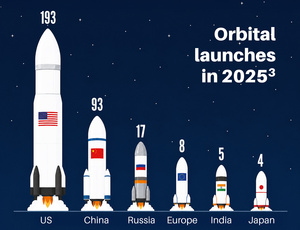
Space - The Facts
Economy; Sent to space; Space and genocide; Toxic emissions.
Who will take the high ground?
As space becomes an increasingly vital arena for war, William J Astore tracks its increased militarization.
Who owns the skies?
A new space race is set to worsen global inequality and extend conflict. We need to return to seeing space as a place for all humankind, argues Nick Dowson.
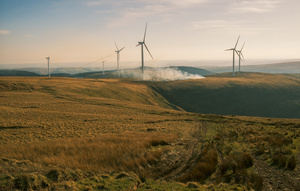
Merthyr rises once again
The Welsh Valleys have been shaped by centuries of extraction, with stark inequality laying the foundation for the rise of the far right today. But there are lessons to be learnt from its rich socialist history, and the solution is also close to home. Maxine Betteridge-Moes, Bethany Rielly and Lydia Godden report.

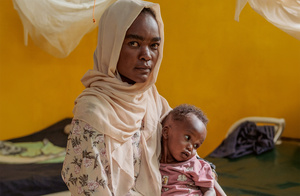
Surviving Sudan’s ‘man-made’ famine
The city of Kadugli provides a devastating window on how starvation is being weaponized in war. Sophie Neiman and Guy Peterson speak to some of those who have fled the siege and are struggling to survive.
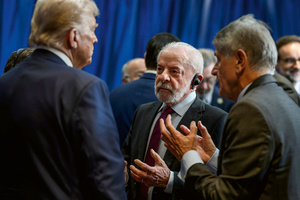
Brazil’s sovereignty
As the state fragments, Lula’s assertions of national sovereignty have exposed the limits of his government’s power, writes Juliano Fiori.
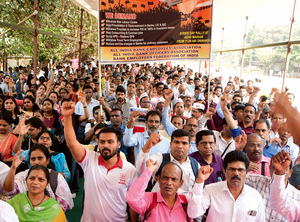
Strikes that shook the world
Around the world, workers use the general strike as a strategy to win their demands and tip the balance of power in their favour.
Articles in this category displayed as a table:

The New Internationalist is an independent bi-monthly not-for-profit magazine that reports on action for global justice. We believe in putting people before profit, in climate justice, tax justice, equality, social responsibility and human rights for all.
Find us:
- Twitter: @newint_au
- Facebook: @newint.au
- Instagram: @newint_au
- Youtube: niaustraliashop
- Apple: App Store
- Android: Play Store
Contact us:
New Internationalist acknowledges the Traditional Owners of Country throughout Australia and recognises their continuing connection to land, waters and culture. We acknowledge that these lands were stolen and sovereignty was never ceded. We pay our respects to Elders both past and present.
© Copyright New Internationalist 1973-2026. Except where otherwise noted, content on this site is licensed under Creative Commons.
Except where otherwise noted, images on this site are © the attributed photographer/illustrator or representative agency.