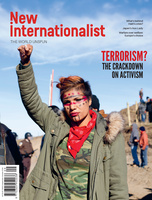
‘Terruqueo’ is a Peruvian term that describes baseless accusations of terrorism against leftwing activists and politicians. A frequent culprit has been the far-right politician Rafael López Aliaga, who until recently was Mayor of Lima and who will now be propping up Keiko Fujimori’s new government. López Aliaga sees terrorists everywhere. Every city has them and they need to be dealt with by military tribunals. Anybody who marched against President Boluarte in 2022-23 was a terrorist, he said, not least the 49 protesters killed with impunity by armed forces. The constant terruqueo has served López Aliaga so well that he recently may have gone too far. After narrowly failing to get to the second round of presidential elections, he is now under investigation for calling workers at the institution in charge of elections terrorists.
Now terruqueo offers a useful lens for understanding a growing international trend: the equation of activism with terrorism. Peruvian terruqueo is used as a smear to silence people on the left. It emerges from a real history of left-wing political violence. In the 1980s and 1990s, Peru experienced a very bloody internal war between the state and the Maoist group Sendero Luminoso (Shining Path). The most dangerous type of person to be at this time was a leftwing activist critical of Sendero, because that made you a target of both sides. Sendero killed many ‘revisionists’ in targeted attacks, and state forces killed many others under the guise of ‘counterterrorism’.
