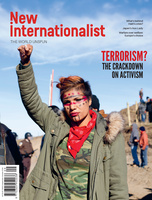
Transported from prison in handcuffs, the five activists were locked behind bulletproof glass, physically separated from the judges and their own lawyers. Another glass barrier separated off journalists, family members and supporters, similarly suspected of posing a violent threat. They were searched so roughly that one defendant’s mother called it sexual assault. In the name of keeping potential weapons out of the courtroom, observers were not allowed pens or any kind of writing utensils. Reporters who asked to use the kind of tools entrusted to kindergarten kids, like crayons, likewise received a firm nein.
The high-security courtroom at Stuttgart-Stammheim is set up for occasions like this. It was most famously the scene of the trial against members of the Red Army Faction, including Andreas Baader and Ulrike Meinhof, from 1975-77. The choice to hold the Ulm 5’s trial in this courtroom a political one, aimed at associating their case with prior high-profile terrorism trials. Yet this choice hides something striking: the ‘Ulm 5’, five Palestine solidarity activists today on trial, in a case slated to run into 2027, are not even accused of a violent crime. While not explicitly charged with terrorism offences, the theatre of security around the Ulm 5 trial and the outlandish media coverage of the activists has painted them as such, tarnishing their right to a fair trial and setting a dangerous precedent.
