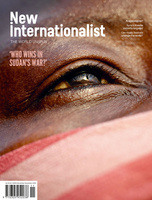
In December 2018, Sudanese citizens took to the streets over the price of a loaf of bread. Within weeks, that anger had grown into something far bigger: a demand to tear down the regime of dictator Omar al-Bashir, who had ruled by fear for 30 years.
Millions filled the streets of the capital, Khartoum, united by a simple call: freedom, peace, justice. For a moment, it seemed like the ultimate proof of people power: that a nation could remake itself from the ground up, not just topple a dictator but rewrite the relationship between citizens and the state.
