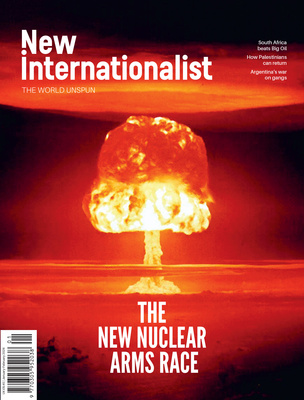
The new nuclear arms race
A note from the editor

It’s an arms race
What would happen if a nuclear bomb went off above the New Internationalist office?
To get an idea I used the online tool Nukemap. If just one W-87, 300kt yield warhead (one of the bombs currently part of the US’s nuclear arsenal), was detonated above our office in Oxford, England, Nukemap predicts that nearly 87,400 people would be killed and a further 99,430 injured.
All the surrounding houses, shops, cafes, university buildings – and the life in and around them – would be vapourized in the fireball. Even at the far edges of the city, people would get third degree burns.
No part of Oxford, or the surrounding towns and villages, would be left unscathed.
The radioactive dust and debris would travel for hundreds of miles in the wind, taking lives for weeks, months and years to come.
Why consider this horrific hypothetical? Because, despite being aware of the risks, our leaders are bringing us closer to nuclear war. Nuclear-armed states are ploughing money into revamping their arsenals as governments abandon control agreements.
In this edition’s Big Story we’re reminded why people have never given up on the achievable goal of nuclear disarmament. It’s vital that we continue to challenge the narrative that nuclear weapons are protecting us, and organize internationally to demand a permanent end to this deadly industry.
Also in this edition, Graeme Green looks at the cash transfer schemes that promise to protect the planet and Salman Abu Sitta explores what the right of return could look like for Palestinian refugees.
Amy Hall for the New Internationalist co-operative.
www.newint.org
The big story
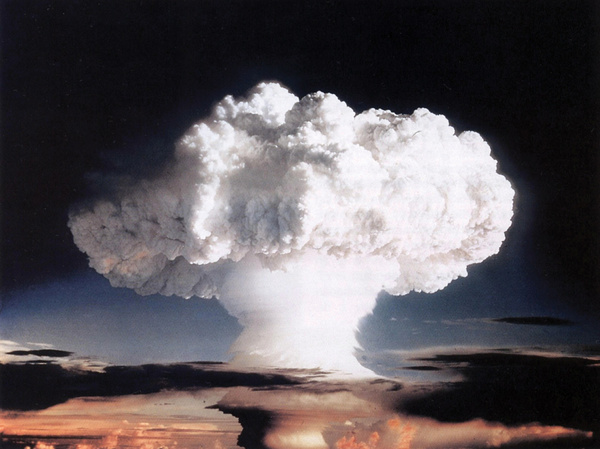
The world’s first hydrogen bomb, codenamed ‘Mike’ is detonated by the US during ‘Operation Ivy’ in the Marshall Islands. Nuclear weapons testing conducted at Bikini and Enewetak atolls in the Pacific Ocean during 1946–1958 exposed local people to radioactive fallout.
Photo: Science History Images/Photo Researchers
Flashpoints to fallout
559 - January, 2026
Could the threat of nuclear war be closer than ever? Amy Hall explores how we got here and the pathways out of the crisis.
The Big Story

To the bunker!
559 - January, 2026
From secret government hideouts to bunkers for the masses, are shelters a realistic way to survive a nuclear blast? Amy Hall investigates.
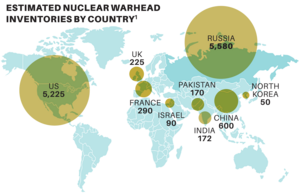
Nuclear weapons - The Facts
559 - January, 2026
Who has what? Nukenomics, toxic testing, and atomic opinions.

WTF are nuclear weapons?
559 - January, 2026
Nuclear weapons and nuclear energy share a common ancestry. Here’s how the nuclear story goes, from mining to meltdowns and everything in between.
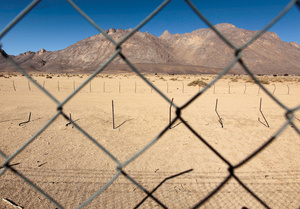
Open wounds
559 - January, 2026
The legacy of French nuclear weapons testing still blights lives in the Algerian Sahara. Tenere Majhoul reports on the fight for justice.

Dispatches from the frontlines
559 - January, 2026
There are some serious social and environmental justice concerns associated with the production, testing and maintenance of nuclear weapons – and communities who pay the price.

Thatcher’s secret war on peace
559 - January, 2026
At the height of the Cold War the British state launched a sprawling surveillance campaign against the peace movement. Bethany Rielly tells the extraordinary story.
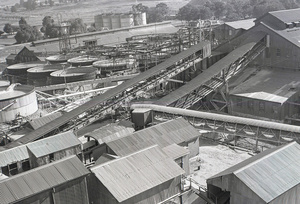
Disarmament dividend
559 - January, 2026
South Africa is the only country to develop its own nuclear weapons – and then dismantle them. Robin E Möser explores what can be learned from apartheid’s atomic secret.
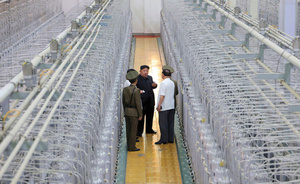
Security or death
559 - January, 2026
As the US clutches on to world dominance, common security for all nations is the only solution to the threat of nuclear war, argues Dae-Han Song.
The cost of the nickel rush
559 - January, 2026
As the world rushes towards ‘green’ technology, Indonesia’s nickel-rich Halmahera island is being torn apart. Neelanjana Rai explores the impacts on Indigenous communities and the land.

No strings attached
559 - January, 2026
Can giving people money with no conditions really help solve the climate crisis and even reduce violence? Graeme Green speaks to those who think it can.
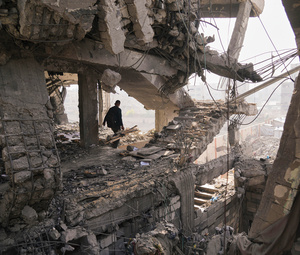
Neocolonialism in Gaza
559 - January, 2026
Palestinian futures are being decided for them yet again as they are dispossessed by the new Trump Plan, argues Yara Hawari. When will Palestinians be free of repackaged colonialism?
Comment


Is Venezuela a glimpse of the future?
559 - January, 2026
Donald Trump’s military aggression in South America and the Caribbean is another chapter in a new age of impunity.
Currents
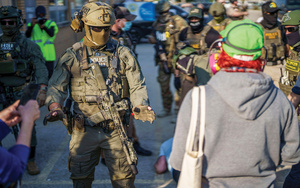
Fear and loathing
559 - January, 2026
As Trump’s deportation drive turns Chicago’s streets into hunting grounds, immigrant communities and their neighbours are banding together. Decca Muldowney reports.
Raiding returns
559 - January, 2026
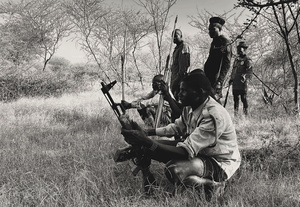
As Uganda approaches the 2026 presidential elections, old patterns of armed violence and cattle raiding are resurfacing in northern Karamoja. Report by Francesco Torri.
Up in arms
559 - January, 2026
As Poland hosts a major arms fair, critics warn Europe is profiting from weapons marketed as "battle-tested" on the bodies of Gaza’s civilians. Report by Alma Selvaggia Rinaldi.
Deadly precedent
559 - January, 2026
As Kyrgyzstan flirts with restoring the death penalty, activists warn that political expediency is trumping justice – and setting a perilous precedent for rights across the region. Report by Gabriella Jozwiak.
Storms and siege
559 - January, 2026
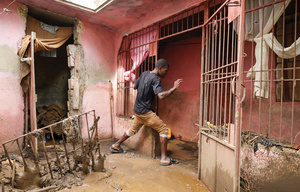
Hurricane Melissa spared Haiti a direct hit, but in a country hollowed out by gang rule and state collapse, even a glancing blow proved deadly. Report by Harold Isaac.
Rights reversed
559 - January, 2026
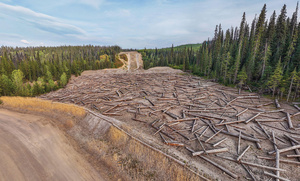
As Canada criminalizes Indigenous land defence in the name of growth and trade, hard-won rights are being quietly rolled back. Report by Changiz M Varzi.

Introducing... Catherine Connolly
559 - January, 2026
Ireland’s new president Catherine Connolly, a socialist independent with a record of principled dissent at home and abroad, has united a fractured left and unsettled the political establishment.
Hiding to survive
559 - January, 2026
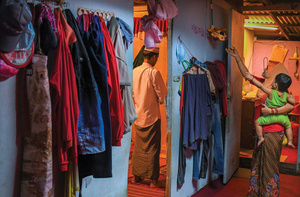
As Malaysia tightens detention operations, Rohingya genocide survivors are being driven into hiding, treated as criminals rather than protected as refugees. Report by Rohim Ullah.
Biafra’s struggle
559 - January, 2026
As Nigeria cracks down on pro-Biafra protests, arrests and police violence are reviving a long-suppressed struggle over marginalization, memory and self-determination in the South East. Report by Adetokunbo Abiola.
Regulars

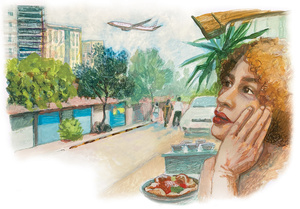
An Ode to Addis Ababa
559 - January, 2026
In her final letter, Maya Misikir reflects on the city’s magnetic pull – and the bittersweet gravity it holds for those who leave and return.

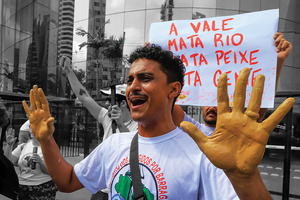
Sign of the Times
559 - January, 2026
In Belém, an activist marks the Mariana dam anniversary by protesting COP30 sponsor Vale.
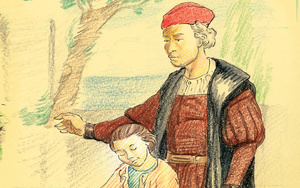
Cartoon History: Columbus
559 - January, 2026
ILYA examines the legacy - and lies - of Christopher Columbus.

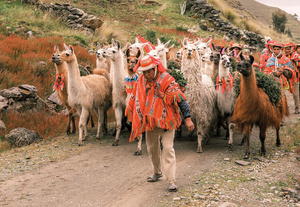
Southern Exposure: Musuk Nolte
559 - January, 2026
Highlighting the work of artists and photographers from the Majority World.
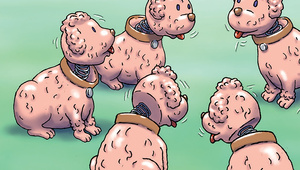

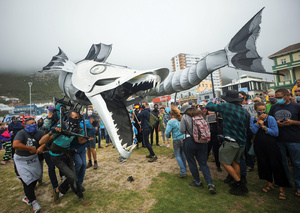

What if...
559 - January, 2026
Palestinians' right of return was realized? Salman Abu Sitta examines how millions of displaced Palestinians could finally go home.

Agony Uncle: Feline friend
559 - January, 2026
Struggling with an ethical dilemma? New Internationalist’s Agony Uncle can help you find answers in our troubled political times.
Film, Book & Music Reviews

Mixed Media: Books
559 - January, 2026
The Future of Travel; Joyful Revolution; Benbecula; The Taste of Lightning.


Books Essay: Together forever
559 - January, 2026
Keir Starmer and a key adviser smash the British left in a tale of sordid deceit. But does it give them too much credit? By Dexter Govan.

The New Internationalist is an independent bi-monthly not-for-profit magazine that reports on action for global justice. We believe in putting people before profit, in climate justice, tax justice, equality, social responsibility and human rights for all.
Find us:
- Twitter: @newint_au
- Facebook: @newint.au
- Instagram: @newint_au
- Youtube: niaustraliashop
- Apple: App Store
- Android: Play Store
Contact us:
New Internationalist acknowledges the Traditional Owners of Country throughout Australia and recognises their continuing connection to land, waters and culture. We acknowledge that these lands were stolen and sovereignty was never ceded. We pay our respects to Elders both past and present.
© Copyright New Internationalist 1973-2026. Except where otherwise noted, content on this site is licensed under Creative Commons.
Except where otherwise noted, images on this site are © the attributed photographer/illustrator or representative agency.